
Best Low-Maintenance Plants for Dubai Villa Gardens (2026 Guide)
A practical list of plants that genuinely cope with Dubai summers without constant watering, fussing or replacing, picked for villa gardens, not nurseries.
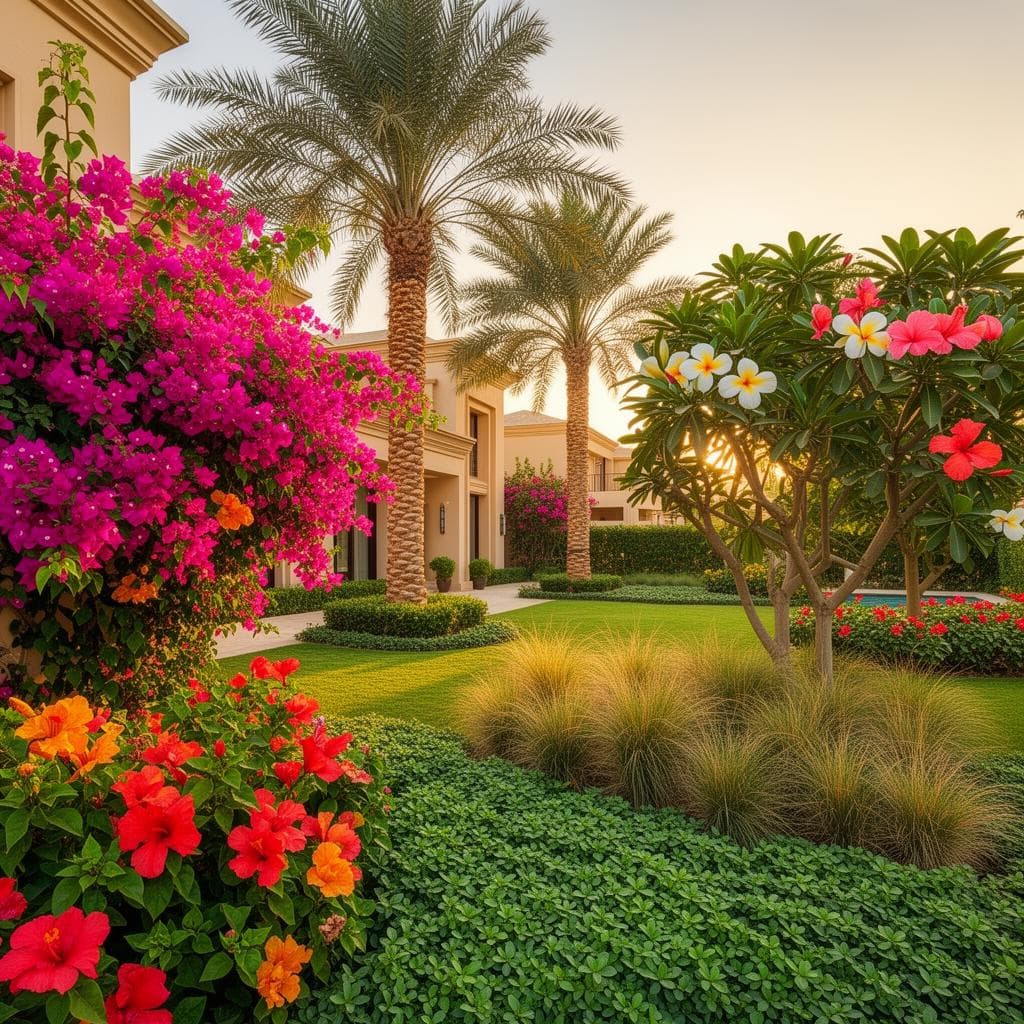
Most plant lists written for Dubai villas read like they were copied from a UK garden centre. They aren't. A garden that looks good in May at 28°C can be brown and crisp by late June, and the watering bill that comes with keeping a temperate garden alive through a Gulf summer is rarely worth it.
When we say "low-maintenance" in Dubai, we mean four specific things. The plant tolerates direct sun for most of the day from May to September, when temperatures sit between 38 and 48°C. It survives on a sensible watering schedule once established, not a daily soak. It doesn't attract heavy pest pressure in our climate. And it doesn't need replanting every season.
One caveat before the list: even the toughest desert plants need consistent water for the first 12 to 18 months while their roots go down. "Drought-tolerant" is what they become, not what they are on day one. A 5 to 10 cm layer of bark or pea-gravel mulch around the root zone cuts watering load by up to 70% and is the single best thing you can do for a Dubai garden after choosing the right plants.
Flowering shrubs that actually flower here
These are the workhorses of UAE villa gardens, giving colour for most of the year with very little input.
- Bougainvillea. Full sun, almost any soil, flowers nearly year-round once mature. Needs an annual hard prune and occasional shaping. The thorns are real, so keep it away from narrow paths.
- Oleander (Nerium oleander). Heat- and salt-tolerant, happy near coastal villas, flowers in pink, white or red. Important caveat: every part of the plant is toxic if ingested. We don't recommend it for gardens with young children or pets that chew.
- Hibiscus. Big, reliable blooms. Tolerates heat well but appreciates a little afternoon shade in July and August. Light feed every couple of months keeps flowering strong.
- Ixora. Compact, glossy leaves, clusters of red, orange or yellow flowers. Likes full sun and slightly acidic soil, so a yearly mulch with compost helps.
- Plumbago. Soft, sky-blue flowers that look unusual in a desert palette. Tougher than it looks and good for a slightly shaded corner.
- Desert rose (Adenium obesum). A succulent shrub with a swollen base and bright trumpet flowers. Loves heat, hates wet feet. Plant it in free-draining soil and water sparingly.
- Frangipani (Plumeria). Scented flowers in summer, and worth knowing it drops most of its leaves in winter. That's normal, not a problem. Plant it where bare branches in January won't bother you.
Ground covers and edging
Lawn is the most expensive thing in a Dubai garden, both to install and to keep alive. Ground covers give you the visual softness without the water bill.
- Lantana. Spreading, sun-loving, flowers in mixed colours and pulls in butterflies. Trim it a couple of times a year to keep it tidy.
- Portulaca (moss rose). Low, succulent, very heat-tolerant. Good for hot edges and gaps in paving.
- Vinca rosea (Madagascar periwinkle). Reliable summer colour at ankle height. Self-seeds gently, which is helpful rather than a nuisance.
If you want a small lawn area, stick to warm-season grasses like paspalum or Bermuda. Avoid cool-season grasses such as ryegrass and fescue; they're sold here but they collapse in summer.
Trees and palms
Trees are the part of the garden most worth getting right, because they're the slowest to replace. For villa-scale planting, these are the dependable choices.
- Date palm. The default for a reason: handsome, productive, and built for this climate.
- Royal palm and areca palm. More ornamental, useful for framing entrances or boundary lines.
- Neem. Fast-growing shade tree with natural pest-resistant properties. Deep roots, so keep it away from pools and paving slabs.
For anything beyond a single specimen, it's worth thinking about placement, soil prep and irrigation together. Our landscape design service covers that, and our plants and trees installation team handles the heavy planting.
Native picks: ghaf, sidr, neem
Native plants are still under-used in most Dubai gardens, which is a shame because they're the most water-efficient option you have.
- Ghaf (Prosopis cineraria). The UAE's national tree. Once established, it needs almost no supplemental irrigation. Beautiful canopy, deep tap root, supports local wildlife. Slow in the first two years, then it gets on with it.
- Sidr (Ziziphus spina-christi). Drought-tough, produces small edible fruit, casts good shade. Long-lived and almost indestructible once settled.
- Neem. Listed above under trees, but worth flagging again. It sits comfortably in the native-adjacent category and pairs well with ghaf and sidr in a more naturalistic garden.
If you're starting a new garden from scratch, building it around two or three native trees and filling in with bougainvillea, lantana and succulents will give you something that holds up through any summer with minimal fuss.
Hedging and screening
For boundary planting and privacy screens, two species do most of the work in Dubai villas.
- Duranta (golden dewdrop). Fast, dense, takes hard pruning. The golden-leaf variety brightens shaded corners.
- Carissa. Drought-tough, glossy dark green leaves, small white flowers. Has thorns, which is useful for a perimeter hedge.
Both tolerate the standard twice-yearly trim that most villa hedges get. If you'd rather not deal with it yourself, our plant maintenance team handles pruning, fertilising and irrigation checks on a regular schedule.
Succulents and architectural plants
For low-water focal points, succulents are unbeatable.
- Agave. Sculptural, dramatic, essentially zero-maintenance once planted. Mind the spines near walkways.
- Euphorbia and cactus species. Used sensibly, they add structure and need almost no water.
- Aloe vera. Practical and ornamental. Tolerates neglect well.
What to avoid
A short, honest list of plants that are sold here but consistently disappoint in villa gardens:
- Hydrangea, lavender, most temperate perennials. They want a Mediterranean or cooler climate.
- Ferns in any spot with direct afternoon sun.
- Cool-season lawn grasses (ryegrass, fescue). They look great in March and die in July.
- Anything sold as a "houseplant" being placed outdoors year-round.
Being realistic about what your garden gets (hours of direct sun, soil drainage, proximity to walls that radiate heat) saves more money than any single product.
Want to see what's in stock
If you'd like to see what we currently have available, our plant shop lists what's in stock at the nursery, with sensible filters for sun tolerance and size. It's a useful starting point whether you're filling one bed or planning a full garden.
Frequently Asked Questions
Related services
Need help putting this into practice? Our team handles these services across Dubai, Abu Dhabi and Sharjah.