
What Garden Maintenance Should Cost in Dubai: A Villa Owner's Guide
Dubai garden maintenance quotes vary wildly because scope, frequency, and crew quality differ. Here's how to read a quote and spot the gaps.
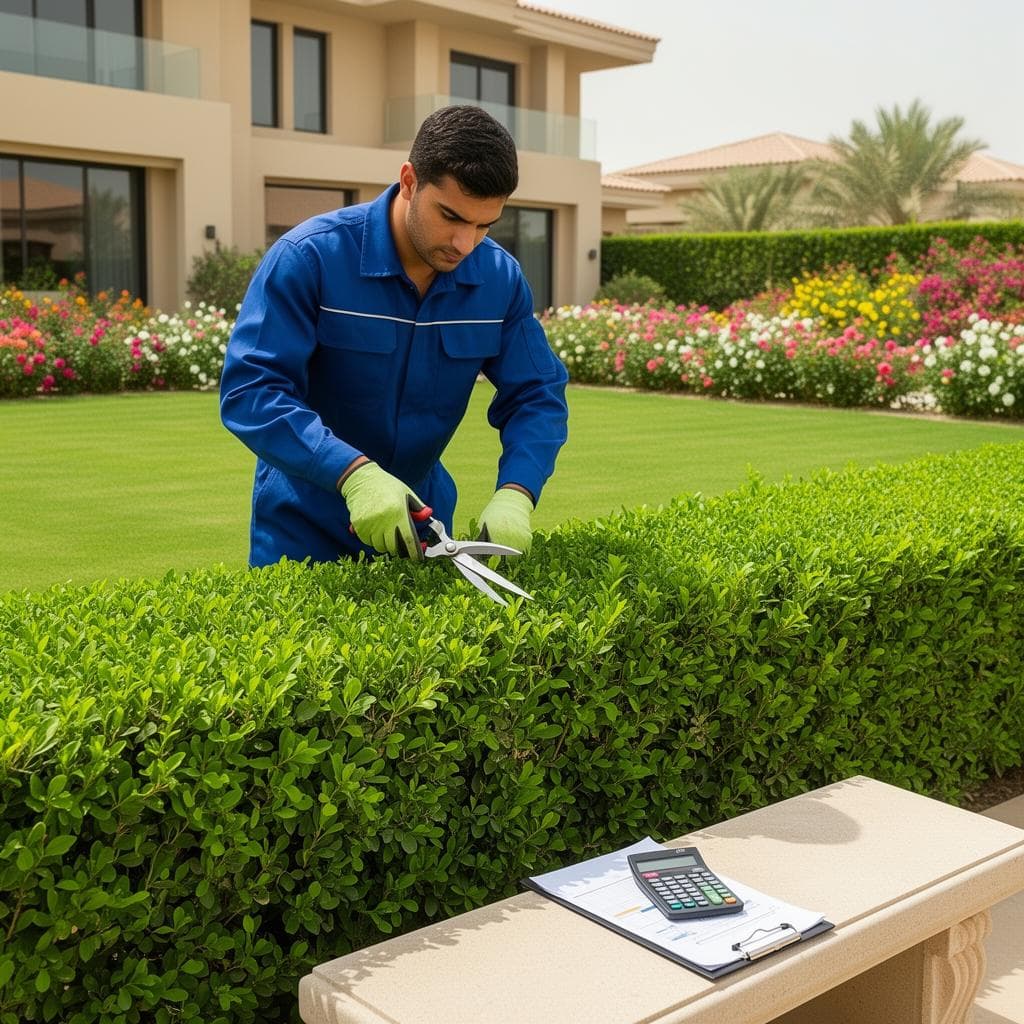
If you have asked two or three companies to quote for maintaining your villa garden in Dubai, you have probably noticed the numbers do not line up. One company comes in at a price that feels too good to be true. Another is three times higher. A third sends a vague one-liner with no scope at all. None of them are necessarily wrong. They are quoting for different work.
The core problem is that "garden maintenance" is not a standard product in Dubai. To one contractor it means a man with a blower and a rake who turns up for an hour and tidies the paths. To another it means a trained crew with a mower, shears, irrigation knowledge, and a written checklist they tick off every visit. Both will call it maintenance. Only one of them will keep your garden alive through a Dubai summer.
This guide is for villa owners trying to make sense of the quotes on their desk. We will not throw specific AED figures around, because honest pricing depends on your plot and your plants. What we will do is explain what drives the number up or down, what should be on the invoice, and what to be suspicious of.
What should be in a standard maintenance visit
A proper villa visit, whether weekly or bi-weekly, covers the same core tasks. The crew should mow and edge the lawn, trim hedges and shrubs to keep their shape, weed the planting beds, blow down hard surfaces, and walk the irrigation system to check that emitters and sprinklers are running. They should also do a quick pest and disease scan, looking for yellowing leaves, scale on hibiscus, or weevil frass at the base of palms, and flag anything that needs follow-up.
None of that is glamorous, and none of it takes specialist equipment beyond a mower, blower, shears, and a ladder. But it is the difference between a garden that stays presentable and one that slowly degrades until you are looking at a replanting bill.
If a quote does not spell out what is included per visit, ask. A reasonable company will hand you a scope without hesitation. If they cannot, that is your first answer.
What pushes the price up
Four things move the number more than anything else.
Plot size. The square metres of actual soft landscape (lawn, beds, planted areas) is the starting point. Hard paving is quick to blow down. Planted area needs hands-on time.
Palms. Palms are the single biggest swing factor in a Dubai garden. They need separate trimming because of the height and the tools involved, and they need red palm weevil treatment to stay alive. A garden with six mature date palms is a meaningfully different job from a garden with none.
Irrigation complexity. A simple drip line is easy to inspect. A zoned system with multiple valves, mixed drippers and sprays, and a controller that needs seasonal adjustment takes a crew that actually understands irrigation. That is not day-labour work.
Plant variety. A lawn-and-hedge garden is straightforward. A garden with roses, fruit trees, ornamentals, and a vegetable patch needs someone who knows how each group is pruned and fed. More variety, more time, more skill.
If your garden is small, shrub-only, and has no palms, you are at the cheap end of the market and a monthly visit may be enough. If you have a lawn, mature palms, a mixed bed scheme, and zoned irrigation, you are not, and quotes that pretend otherwise are quoting for a different garden than the one you have.
Frequency: weekly, bi-weekly, or monthly
Most villas with a lawn need weekly visits during the growing season. Grass in Dubai grows faster than people expect once temperatures climb, and a fortnight between mows turns into a scalping job that stresses the turf. Bi-weekly works for small gardens with low plant counts and no lawn. Monthly is realistic only for very small plots or shrub-only courtyards where nothing is growing fast.
A contractor who offers you monthly visits for a full villa garden with a lawn is either underpricing the work and will cut corners, or they are planning to upsell you on "extras" every time something goes wrong that weekly visits would have caught. For more on what regular garden maintenance in Dubai actually involves, the scope page lays it out.
What is usually billed separately
Even a well-priced maintenance contract will not include everything. The following are normally separate line items, and they should be, because pretending they are bundled into a low monthly fee is how contractors end up cutting corners.
- Red palm weevil treatment. Done twice a year, typically March and October, using a licensed pesticide. This is not optional if you have palms. It is the difference between keeping them and losing them.
- Tree pruning at height. Anything that needs a proper ladder, climbing kit, or a cherry picker.
- Palm crown trimming. Skilled, separate work from general hedge trimming.
- Fertilising programmes. Seasonal feeding for lawn, palms, and beds, with the right product at the right rate.
- Full irrigation rebuilds. Replacing controllers, valves, or long runs of pipe.
- Soil amendment. Compost top-ups, gypsum for salinity, mulch refreshes.
These should appear in your contract as add-ons with clear pricing, not as surprises six months in.
What should be on every monthly invoice
Whatever the headline price, your invoice should make it obvious what you paid for. At a minimum, expect:
- Date and crew name for each visit in the month
- Lawn mown and edged
- Hedges and shrubs trimmed where due
- Beds weeded and tidied
- Hard surfaces blown clean
- Irrigation system walked and any faulty emitters flagged
- Pest and disease scan noted, with any findings written down
- Any extras (palm work, treatments, fertiliser) listed as separate lines with the date and product used
If your invoice is one line that says "garden maintenance, monthly", you have no way of knowing what was actually done.
Red flags in cheap quotes
A quote that is dramatically below the others usually means one or more of the following: no insurance, no trained staff, no proper equipment beyond a blower and rake, no irrigation knowledge, and no licensed pesticide handling. The saving looks good on month one. By month six you are paying to replace plants that should have been treated, repair irrigation that was never inspected, and reshape hedges that were hacked rather than pruned.
Day-labour gardeners have their place for one-off tidy-ups, but they cannot diagnose an irrigation fault, dose fertiliser correctly for a Dubai summer, or treat palm pests properly. If you have palms, mixed beds, or zoned irrigation, the cheap quote is not actually cheaper.
What a fair quote looks like in writing
A quote you can trust will tell you, on paper: the scope of each visit, the visit frequency, the named crew or supervisor, the equipment they bring, their insurance status, and what is not included. It will list seasonal extras like weevil treatment and fertilising as separate items with prices, so you can plan the year. It will be specific to your plot, not a generic per-square-metre rate dropped into a template.
You do not need the cheapest quote. You need the one where you can read it, understand exactly what you are buying, and reach the same person next month when something needs attention.
A note on benchmarking
If you want to sense-check what you have been quoted, we publish how we quote and what is typically included on our landscaping prices page. It is not a fixed price list (every villa is different), but it gives you a framework to compare against, in case it is useful to benchmark before you sign anything.
Frequently Asked Questions
Related services
Need help putting this into practice? Our team handles these services across Dubai, Abu Dhabi and Sharjah.