
Landscape Design Ideas for Dubai Villas: What Actually Works in UAE Gardens
Need this done for you? Free site visit. Message us on WhatsApp (opens WhatsApp)
Landscape design approaches for UAE villas: low-water desert gardens, tropical builds, privacy planting, green walls, rooftops and hardscape-heavy designs, with plant choices and honest maintenance notes.
Quick answer
Dubai villa landscape zones range from desert-style plantings using agave, ghaf, and sidr to tropical zones with areca palms, heliconias, and bird of paradise. Privacy screening takes 18-36 months to establish from planting. Artificial turf can reach 65-70°C surface temperature in direct summer sun. Hardscape-heavy designs using porcelain tiles or natural stone need only about 2 maintenance visits a year.
Key takeaways
- Desert-style zones use agave, euphorbia, adenium (desert rose), aloe vera, ghaf, and sidr.
- Tropical zones use areca palms, traveller's palm, heliconias, hibiscus, and bird of paradise.
- Privacy screening from planting takes 18-36 months to become effective.
- Artificial turf can reach 65-70°C surface temperature in direct summer sun.
- Hardscape-heavy designs using porcelain tiles, gravel, or natural stone need only about 2 maintenance visits a year, versus more frequent care for planted zones.
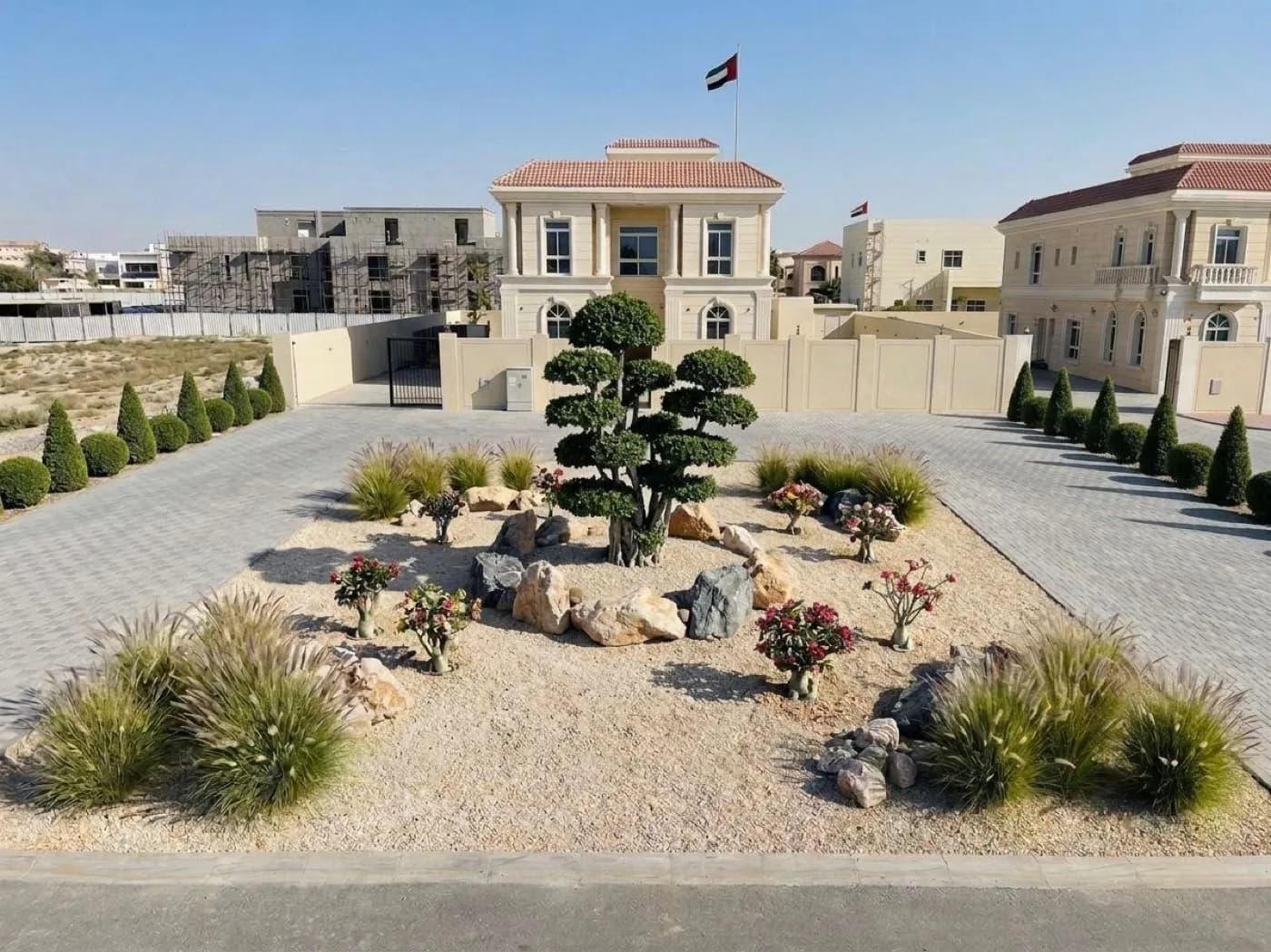
Most Dubai villa gardens underperform for the same two reasons. The first is choosing plants for how they look in a nursery or a rendered drawing, not for how they perform in the actual conditions they are being placed into. The second is under-specifying irrigation, soil preparation, and shade from the start, then spending the next several years compensating.
The twelve design approaches below are concrete and practical: specific plant choices, material options, and an honest look at maintenance in each case. All of them hold up in a UAE summer with sensible management.
1. Desert and xeriscape garden
A xeriscape approach uses drought-adapted plants, gravel mulch, and minimal or no lawn to create a garden that needs almost no supplemental irrigation once established.
The palette: agave, euphorbia, adenium (desert rose), aloe vera, ghaf, sidr, opuntia cactus, and dwarf ornamental grasses. These are not dull or sparse by default: a well-designed xeriscape in the UAE can have flowering interest from September through May and strong architectural structure year-round.
Maintenance reality: occasional pruning, annual fertilising for the trees, and a drip system running at low frequency. Water consumption is a fraction of a lawn-based garden. This is the most water-efficient residential design approach available in the UAE.
2. Lush tropical look
A tropical garden is achievable in Dubai but requires an honest conversation about what it costs to run. The look uses dense planting with large-leaf species, flowering perennials, and visible lushness.
Species that actually hold up: bird of paradise (Strelitzia), bougainvillea (prolific and heat-tolerant), areca palms, traveller's palm, hibiscus, and bird's nest ferns in shaded zones. Heliconias work in part shade but need protection in peak summer. The irrigation requirement for a 200 sqm tropical garden will push DEWA consumption meaningfully higher than a xeriscape equivalent. A smart drip controller is essential, not optional.
3. Native and adapted species garden
Using plants native to the Arabian Peninsula and those adapted to Gulf conditions over centuries produces a garden that requires the least management in the long run. Ghaf (the UAE's national tree), sidr, neem, seashore paspalum lawn, bougainvillea (naturalised here for decades), and lantana are the anchors.
The limitation is patience: a native garden looks sparse for the first two to three years while plants establish. The payoff is a garden that weathers a summer with almost no intervention and improves with age rather than needing constant replacement.
4. Indoor to outdoor integration
One of the biggest opportunities in Dubai villa design is creating a continuous connection between interior living space and the garden. This means planning the landscape in relation to where the doors and windows are, not as a separate project that happens to be outdoors.
Practical elements: continuous flooring material from the interior through the external paving (large-format porcelain tiles work well for this), sliding or folding doors that open fully, a shade structure extending directly from the villa's roof line, and vertical planting on party walls visible from inside. When done well, the garden effectively extends the living room through the cooler months.
5. Privacy planting
Many Dubai communities have villas that overlook each other, particularly on corner plots or where upper floors face neighbouring gardens. Privacy planting is one of the most common design requests we receive.
Fast-growing screening species: Ficus hillii (dense, dark green, takes hard pruning), Thuja orientalis (upright columnar form, very fast), bamboo in below-ground containment barriers (spreads aggressively without them), and Duranta (softer screen in gold or green leaf).
A tiered approach works best: tall structural trees at the boundary, a medium dense hedge at 2 to 3 metres, and lower shrubs in front to fill the visual gap at eye level. Expect 18 to 36 months from planting to effective screening.
6. Lawn alternatives
Natural lawns are the most water-intensive and labour-intensive element in a typical Dubai villa garden. There are good alternatives for most situations.
Artificial turf: Low ongoing cost and consistent appearance, but surface temperatures in direct summer sun can reach 65 to 70°C. Best in shaded areas or where the lawn is primarily decorative. See the real vs artificial grass comparison for a full comparison.
Gravel with planting: A gravel base with scattered planting and stepping stone paths is low maintenance, visually clean, and significantly cheaper to water. Decomposed granite gives a softer, warmer colour than quartz gravel.
Groundcover plants: Lantana, portulaca, and dichondra can replace lawn in partially shaded areas, providing a green surface with almost no irrigation once established.
7. Seasonal colour
Dubai's colour season runs from October to April. Planning for it means using two layers: structural perennials that provide interest year-round, and annual rotations for concentrated colour during the cool season.
Structural colour year-round: bougainvillea (peaks in cool months but flowers almost continuously once mature), ixora, plumbago, and desert rose.
Annual cool-season rotations: marigolds, petunias, snapdragons, and celosias planted in October and replaced in April before the heat arrives.
Summer colour strategy: accept that most annuals will not survive and rely on foliage texture and plant structure. A garden composed of agave, architectural grasses, and clean paving looks intentional in summer rather than tired.
8. Outdoor lighting integration
Good outdoor lighting has a disproportionate effect on how usable the garden feels in the evenings, which in Dubai is the primary outdoor time for most of the year.
Plan lighting in three layers: ambient (low path lighting and soft uplighting on planting), task (focused light over dining and cooking areas), and feature (tree uplighting, wall washing on textured surfaces).
Warm white at 2,700 to 3,000K is the right colour temperature for living spaces. Path and step lighting can go slightly cooler at 3,000K.
Critical point: conduit must be planned and laid before paving goes down. Retrofitting lighting into an existing garden is significantly more disruptive and expensive than including it in the original build.
9. Container and courtyard gardens
For smaller plots, entrance courtyards, rooftop terraces, and internal courtyards, a container-based approach is practical and can be visually strong.
Large containers at 600 mm diameter and above retain moisture longer and give plants enough root volume to establish properly. Self-watering pots work well in Dubai for balconies and rooftops where permanent irrigation infrastructure does not reach. Clustering pots in groups creates a shared humidity zone that benefits all of them.
Best species for containers in Dubai: areca palm, frangipani, bougainvillea (in very large pots), ixora, bird of paradise, and agave for a low-water option.
10. Hardscape-heavy design
For rental properties, villa owners who travel frequently, or anyone who genuinely does not want garden management obligations, a hardscape-heavy design is the most practical approach.
The formula: quality paving as the main surface, a small number of structural plants in defined beds (agave, a specimen tree, a single hedge line), gravel zones for texture, and a shade structure over the main seating area. Plant count is low but plant selection is deliberate: species that can handle variable irrigation and minimal pruning without looking neglected.
The visual quality comes from the materials: porcelain, natural stone, and rendered blockwork can produce a garden that looks excellent with two maintenance visits per year.
11. Edible garden section
A productive garden section is increasingly common in Dubai villa projects. The UAE growing season from October to April is genuinely good for vegetables: tomatoes, cucumbers, peppers, leafy greens, and most herbs all do well in this period.
Raised beds at 600 mm height or above make management easier and allow proper soil mix independent of the native ground. A dedicated drip irrigation zone with a separate controller schedule is important because vegetables need more consistent moisture than ornamental planting. The beds go quiet in summer, which is manageable as a seasonal feature rather than a maintenance problem.
12. Phased development
Not a style but a practical approach worth naming: completing a full landscape in one go on a tight budget leads to compromises in every area. The most effective approach for most villa owners is to prioritise structure, soil preparation, and irrigation in phase one, then add feature plants and decorative elements in year two once the foundation is working.
A garden built in two phases over eighteen months is almost always in better condition at the two-year mark than one built entirely at once with the budget spread thin.
More ideas worth considering
Green walls and vertical planting. Vertical gardens suit compact spaces such as townhouse courtyards and apartment terraces where ground area is limited. They need their own irrigation line and regular upkeep to stay healthy.
Rooftop gardens. Roof terraces work with containers or raised planters, provided the structure can carry the load and the drainage is sorted first. Our rooftop garden guide covers the details.
Water features. A small fountain or waterfall adds sound and a focal point, and works best near the seating area. Features like waterfalls and pools are part of what we build, quoted after a site visit.
Small gardens. In a small plot, a few well-placed plants, vertical elements and a clear layout read as more spacious than many small pieces scattered around.
Common design mistakes in Dubai villa gardens
Choosing plants for looks rather than conditions. A plant that looked good in the nursery in October may have been grown in a climate nothing like yours. Check sun exposure, soil drainage, and irrigation requirements before buying.
Under-speccing irrigation. A lush design needs a well-engineered drip system, not a timer and some drip lines run to whatever was convenient at installation. An irrigation system that delivers the wrong amount at the wrong time will kill a good design within one summer. See the irrigation systems guide for what a proper system involves.
Ignoring soil preparation. Dubai's native desert soil has almost no organic matter and drains instantly. Plants in unprepared desert soil need two to three times as much irrigation to establish as plants in properly amended beds, and establishment failure rates are significantly higher.
Planting too close. Everything in a UAE nursery looks manageable at the time of purchase. Bougainvillea planted one metre from a wall will cover it in two years. Duranta planted at 60 cm spacing will merge into an unmanageable mass within eighteen months. Follow the mature spread, not the nursery pot size.
No phasing plan. Attempting to do everything at once on a tight budget produces a garden that looks underfunded everywhere. Prioritise structure and irrigation in year one.
If you are at the early stages of planning a garden project and would like to talk through which approach suits your specific plot, our landscape design service starts with a free site visit and a brief that sets out what will actually work before any drawings are produced. We work across Dubai, Sharjah and Abu Dhabi.
Related resources
- ServiceOur Landscape Design in Dubai
- GuideRooftop Garden Design in Dubai, Ideas, Plants & Costs
- GuideWhat Affects the Cost of Landscaping in Dubai? A Practical Guide
- GuideDeveloper NOC for garden work: Emaar, Nakheel, Damac and Dubai Properties
- GuideDate palm care in Dubai: watering, feeding, pruning and pests
- GuideOlive tree care in Dubai: sun, watering, pots and pruning
- TermXeriscaping
- TermSoftscaping
- Green BeetleAbout Green Beetle