
Pergolas in Dubai: Types, Materials and What Lasts in UAE Heat
Need this done for you? Free site visit. Message us on WhatsApp (opens WhatsApp)
Which pergola materials hold up in UAE heat, how roof types compare from fixed to louvred, styles and add-ons, developer NOC approval, and how to build a complete outdoor room.
Quick answer
Fixed aluminium, motorised louvre, and teak or hardwood pergolas, and shade sails, are each quoted after a free site visit. Powder-coated aluminium holds up best in Dubai's UV and heat. In communities by developers such as Emaar, Nakheel, Damac and Dubai Properties, a pergola usually needs the developer's NOC; the owner applies and we provide the drawings.
Key takeaways
- Fixed aluminium, motorised louvre, teak or hardwood and WPC pergolas, and shade sails, are each quoted after a free site visit.
- Powder-coated aluminium needs the least upkeep; teak needs annual oiling to prevent silvering and cracking.
- A pergola in a developer community usually needs the developer's NOC. The owner applies, and Green Beetle provides the drawings and details.
- Louvred roofs let you tune shade, ventilation and rain protection through the day and season.
- Common add-ons include LED lighting, side screens, ceiling fans, heaters and rain sensors.
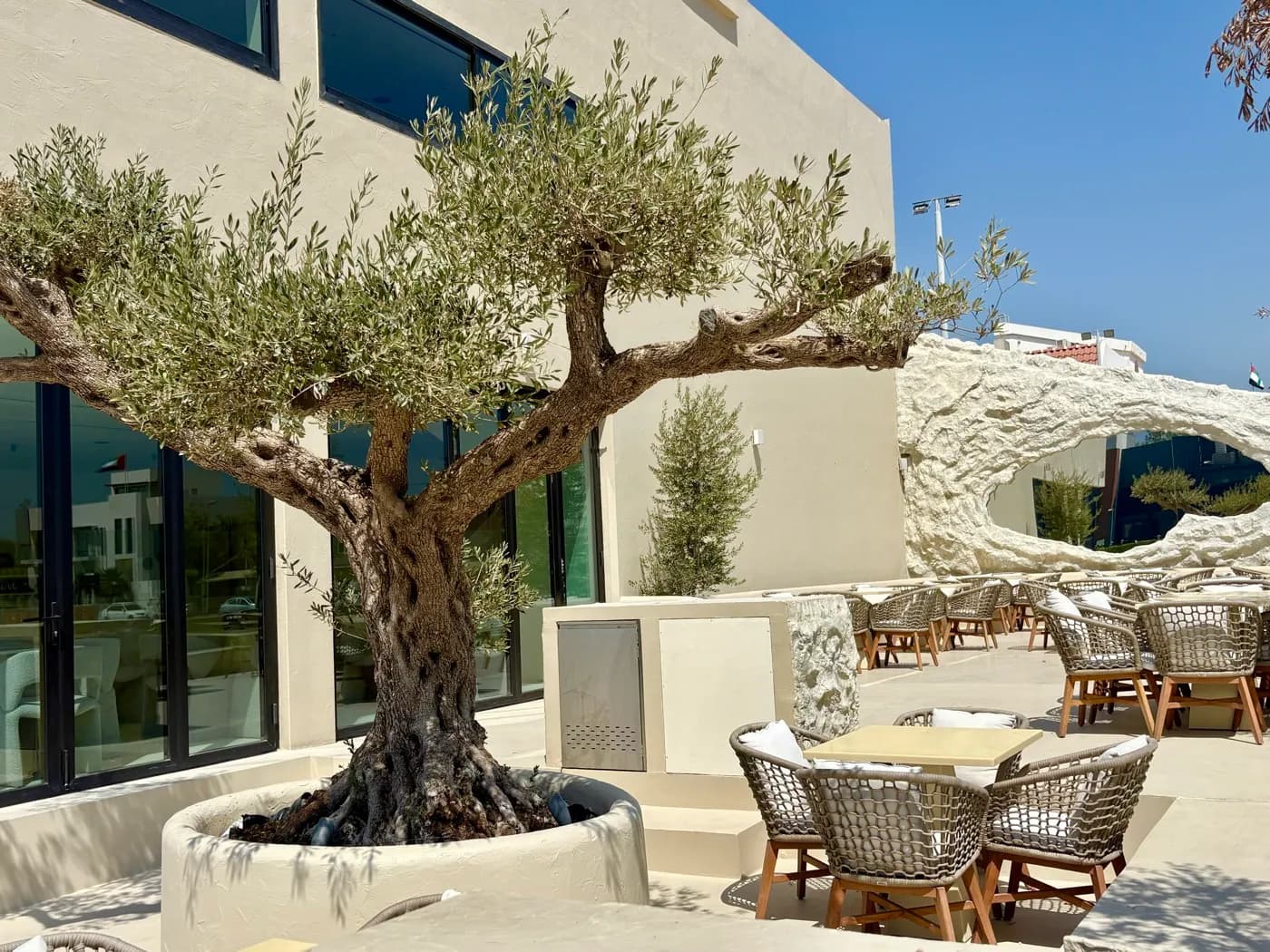
There are roughly four months of the year when a Dubai garden is genuinely pleasant to sit in without shade: October through January, with February, March, and September manageable in the morning and evening. The rest of the year, an unshaded patio is effectively unusable between 9 AM and 7 PM.
A well-specified pergola does not extend the usable season into July. Nothing does. What it does is make the shoulder months significantly more comfortable, turn a patio that bakes in afternoon sun into a liveable outdoor room, and convert October to February from occasional use into daily use. That is a meaningful return on the investment for a villa owner in Dubai.
This guide covers materials, roof types, what affects the price, permit considerations, and what actually holds up in UAE conditions.
Why shade matters more in Dubai than most places
Dubai has very strong sun for much of the year, with an extreme UV index through the summer months. Outdoor materials, furniture and plants that would last for decades in northern Europe degrade much faster in a Dubai garden if they sit in direct sun.
A shade structure protects not just the people sitting under it but the surrounding planting, furniture, and surface materials. A pergola over a patio also reduces the heat load on the adjacent interior wall, with a small but measurable effect on cooling costs inside the villa.
Popular pergola styles
- Louvred (bioclimatic) pergolas: motorised roof slats that rotate to control sun, ventilation and rain protection.
- Fixed-roof pergolas: simpler, and well suited to shaded patios.
- Cantilever pergolas: modern designs with no front posts.
- Wall-attached pergolas: extend a living room onto an outdoor terrace.
- Freestanding pergolas: work as a poolside or garden focal point.
Matte black, charcoal grey and bronze finishes are now more common than the old standard white.
Material comparison
Aluminium
Powder-coated aluminium is the most popular pergola material for Dubai villas. It does not warp or split through the heat and humidity cycle. It does not need regular treatment or painting. The powder coating, if of decent quality, holds its colour for many years before it starts to chalk. With proper fixing, the structure itself is not the weak point.
The limitation is aesthetic: aluminium profiles are by nature geometric and modern. They suit contemporary villas well but can look cold in a traditional or Arabic-influenced garden setting.
Hardwood (teak and treated timber)
A well-built teak pergola looks excellent in a Dubai garden. The warm grain and natural colour work with planting in a way aluminium cannot match. The trade-off is maintenance: without annual oiling, teak will silver and eventually crack in UAE conditions. Even with treatment, timber is more susceptible to long-term degradation than aluminium in a climate with extreme UV, high summer heat, and periodic humidity.
Treated structural timber is a cheaper entry point than teak but needs more frequent maintenance and typically has a shorter effective lifespan in UAE conditions.
WPC (Wood-Plastic Composite)
WPC uses a combination of wood fibre and plastic binder to give the appearance of timber without the maintenance requirements. Quality varies considerably between suppliers. Good WPC products resist warping and do not need oiling. Lower-quality WPC can expand and contract noticeably in UAE temperature swings, opening gaps at joints over time.
WPC is a reasonable middle ground for buyers who want a timber aesthetic without teak-level maintenance, but it should be evaluated on specific product quality rather than bought on price alone.
Roof types
Fixed solid roof
A fixed aluminium or polycarbonate panel roof provides full protection from sun and rain. It is the best option for creating a genuinely all-weather outdoor room. The limitation is ventilation: on still evenings in October and November, a fully enclosed solid roof can trap heat underneath it.
Polycarbonate panels diffuse light attractively and are significantly cheaper than solid aluminium roofing, but they degrade under UAE UV over time and will need replacing.
Louvre pergola (adjustable roof)
Motorised aluminium louvre pergolas are the premium option in Dubai and have become significantly more common in the past five years. Adjustable blades open to let in breeze and close to block sun or rain. Quality models include rain sensors that close the blades automatically. They are the most versatile option for the Dubai climate because you can tune the shade level through the day and season.
The price premium over a fixed pergola is significant, but the usability gain in the shoulder months is real.
Tensile fabric shade sail
Shade sails are the most affordable shade option and are widely used in Dubai over pool areas, courtyards, and children's play areas. They do not provide full weatherproofing and are not suitable as a formal dining area in the rain. In high winds during the spring shamal season, they need to be lowered or furled. UV-stabilised fabric eventually fades and loses tension, and then needs replacing.
What affects pergola cost
We quote pergolas after a free site visit. The price depends on the material (aluminium, teak or treated hardwood, WPC, or tensile fabric), the size, whether the roof is fixed or a motorised louvre, and site conditions. A large-format louvre pergola costs far more than a fixed-roof one, and a rooftop installation typically costs more than a ground-floor patio installation due to access and structural load requirements.
Developer approval (NOC)
Pergolas are permanent structures added to a villa. In communities by developers such as Emaar, Nakheel, Damac and Dubai Properties, a pergola usually needs the developer's No Objection Certificate (NOC) before installation. The owner applies for it. Green Beetle provides the drawings and details the application needs.
Requirements and processing time differ by community, so check with your developer or community management early, before you fix an installation date. Shade sails and freestanding canopies that do not attach to the building may fall outside the requirement, but this also varies by community.
Maintenance by material
- Aluminium: Wash down with mild soap and water annually. Inspect anchor bolts and fixings every two to three years. Essentially maintenance-free beyond this.
- Teak or timber: Oil treatment at minimum once per year, ideally twice. Inspect for surface cracks and treat immediately before they develop.
- WPC: Annual wash, inspect fixings. No oil or paint required.
- Tensile fabric: Lower or furl during high-wind events. Clean with mild detergent. Replace when colour fades significantly or tension is lost.
Add-ons that make a difference
Common upgrades on Dubai villa pergolas include LED strip lighting along the beams, retractable side screens for wind and dust, ceiling fans for hot evenings, heaters for the cooler months and rain sensors on louvred roofs. Each one adds to the price, so decide which matter to you before the quote.
Choosing who builds it
Ask who manufactures the structure and who installs it. Confirm that installation is handled by the supplier's own team rather than subcontracted, and ask for a written, itemised quote before any work starts. Green Beetle's own team does the aluminium work.
Creating a complete outdoor room
A pergola becomes most useful when it forms part of a complete outdoor space rather than standing in isolation. Recessed LED strip lights in the beam channels provide evening illumination without visible fittings. A ceiling fan mounted to the structure moves air effectively in October and November when natural breezes are light. Climbing plants such as bougainvillea or jasmine soften the structure over two to three growing seasons. Built-in planters at the base of the uprights or a row of large container plants complete the enclosure.
For a broader look at what a full landscape project involves alongside a shade structure, the landscaping cost guide covers what affects the price phase by phase. If you would like to explore pergola options for your specific garden, our landscape design service covers shade structure specification as part of the full design process. The site visit is free.