
Plant Care
Peace lily care in Dubai: watering, light and brown tips
On this page
- How much light does a peace lily need?
- How often should you water a peace lily in a Dubai summer?
- And in winter, from November to March?
- What does AC do to a peace lily?
- Can tap water cause brown tips?
- What soil, pot and repotting does it need?
- How big does a peace lily get indoors?
- Why are my peace lily's leaves drooping, yellow or brown?
- Which pests affect peace lilies?
- Shop for This
- Frequently asked questions
Quick answer
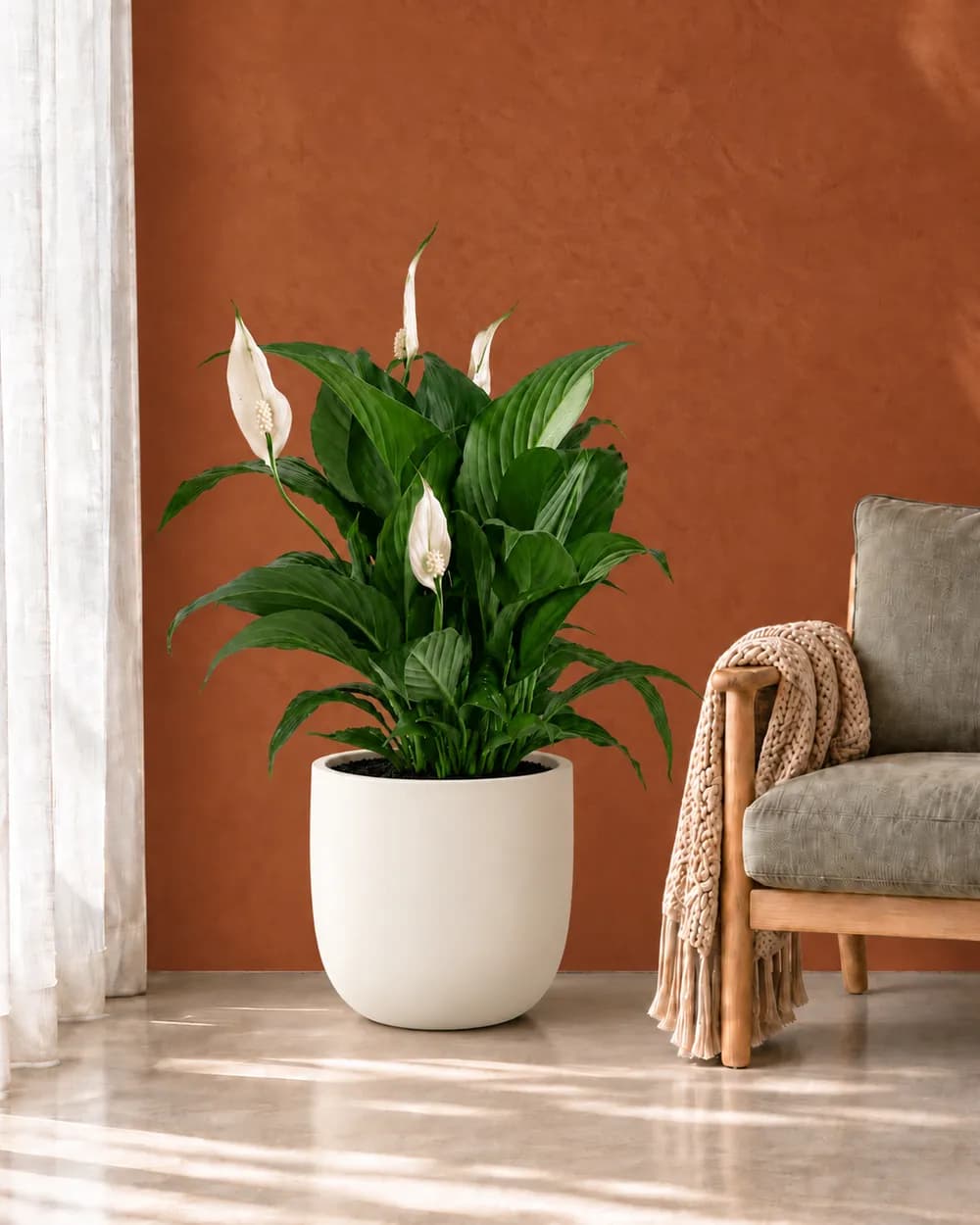
A peace lily (Spathiphyllum) needs medium to low indirect light, water when the top 2 to 3 cm of soil is dry (about weekly in a Dubai summer, every 8 to 12 days in winter), and more humidity than air conditioning gives it. It droops when thirsty and recovers quickly.
How much light does a peace lily need?
Peace lilies tolerate shade better than many flowering plants. Medium to low indirect light keeps the leaves dark green and glossy. A spot a few metres from a window, or in a bright room with no direct sun, works.
To get the white spathes, give it brighter indirect light. A peace lily in a dim corner will often grow leaves without flowers. Direct Dubai sun through glass burns the leaves, leaving yellow or brown scorched patches.
How often should you water a peace lily in a Dubai summer?
Peace lilies like evenly moist soil, but not soggy. In summer under AC, water about once a week, when the top 2 to 3 cm is dry. Water until it drains from the bottom, and empty the saucer after 15 minutes.
Peace lilies are good communicators. The whole plant sags when it needs water. If you water as soon as you see that, it usually perks up within hours. Letting it wilt often weakens the plant and brings brown tips, so water before it gets that far.
And in winter, from November to March?
Growth slows, so every 8 to 12 days is typical indoors. Keep checking the soil. A plant in a bright room dries faster than one in a shady corner.
What does AC do to a peace lily?
Peace lilies come from humid tropical forest floors. Air conditioning dries the air and turns leaf tips brown and crisp. Cold air blasting from a vent can cause leaf edges to blacken or curl.
Ways to help:
- Move it out of the direct airflow.
- Group it with other plants to share moisture.
- Stand the pot on a pebble tray with water below the top of the pebbles.
- Use a small humidifier in a very dry room.
- Wipe the leaves with a damp cloth to remove dust.
Can tap water cause brown tips?
It can, in some homes. Minerals and salts can build up in the soil and burn leaf tips over time. Every few months, flush the pot by watering slowly with plenty of water and letting it drain fully. If you have access to filtered or rain water, some growers prefer it for sensitive plants. We haven't tested water types, so treat that as a general horticultural tip rather than a rule.
What soil, pot and repotting does it need?
Use a moisture-retaining but airy indoor mix, such as potting soil with perlite or bark. The pot must have holes. Peace lilies grow as a clump. Repot every 1 to 2 years, in spring or autumn, into a pot one size bigger, when roots fill the pot or push out of the base. You can divide a crowded clump at the same time. Our plant repotting service covers larger specimens.
How big does a peace lily get indoors?
Most peace lilies stay between about 40 cm and 1 m tall and wide, depending on the variety. Large varieties exist, but a standard shop plant stays manageable. See our peace lily listing.
Why are my peace lily's leaves drooping, yellow or brown?
- Drooping with dry soil: thirst. Water and it should recover.
- Drooping with wet soil: overwatering or root rot. Let the soil dry, check roots for brown, mushy parts and repot if needed.
- Yellow leaves: overwatering, or normal ageing of old leaves. Remove ones that have fully yellowed.
- Brown tips: dry air, vents, salt build-up or occasional wilting.
- Brown scorched patches: direct sun.
- No flowers: not enough light, or a very young plant.
- Green flowers: white spathes naturally fade to green as they age. Cut the flower stalk at the base.
Which pests affect peace lilies?
Spider mites, mealybugs, scale and fungus gnats are the usual ones. Mites like dry AC air and leave speckling on the leaves. Mealybugs hide where the leaf meets the stem. Fungus gnats come from soil that stays wet.
Wipe the leaves with a damp cloth, including the undersides. Dab mealybugs with a cotton bud dipped in rubbing alcohol. Rinse the plant in the shower for mites, and let the surface of the soil dry between waterings for gnats. If you manage many plants in an office, our team can help through plant maintenance, quoted after a free site visit.
For similar humidity-loving plants, read our calathea care guide. Or visit the indoor plants category.
Reviewed by the Green Beetle plant team.
Key takeaways
- Water when the top 2 to 3 cm of soil is dry: roughly weekly in summer, every 8 to 12 days in winter, under AC.
- Medium to low indirect light is enough for leaves. White flowers need brighter light.
- Drooping that recovers after watering means thirst. Yellow leaves with wet soil mean overwatering.
- Brown tips are common in dry AC air. Group plants, use a pebble tray, and flush the pot now and then.
- Keep it out of direct sun and out of the flow from a vent.
Shop for This
- Peace Lily
AED 105
 African Fig Tree
AED 149
 African Violet
AED 35
Need a Hand?
Plants maintenance
Want a hand with your plants?
Price on quote after a free site visit.
See Plants maintenancePlant Doctor Visit
One visit to find and fix the problem
We check the plant, change the soil, feed, prune and show you what to do next. Price on quote.
Book a Plant Doctor Visit