
Calathea care in Dubai: humidity, water and crispy edges
Need this done for you? Free site visit. Message us on WhatsApp (opens WhatsApp)
Calathea care for Dubai homes: filtered light, watering under AC, humidity ideas, repotting and fixes for crispy edges, curling leaves and spider mites.
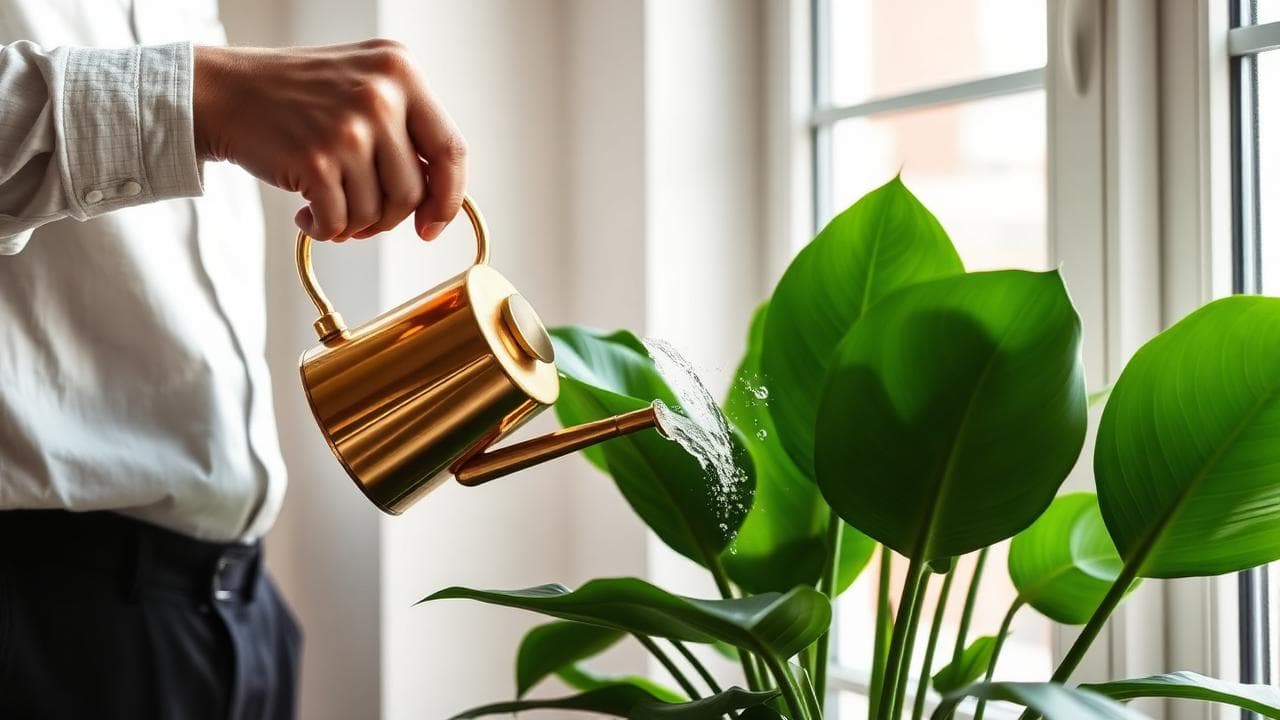
Calathea is a harder houseplant in Dubai because it wants humid air and air conditioning removes it. It needs medium indirect light, evenly moist soil (water about every 5 to 7 days in summer, 7 to 10 in winter) and shelter from vents. Crispy edges are the usual complaint.
Key takeaways
- Medium, indirect light. Direct sun bleaches the patterned leaves.
- Keep the soil lightly moist, never soggy and never bone dry: about every 5 to 7 days in summer, 7 to 10 in winter, under AC.
- Dry air is the main problem. Group plants, use a pebble tray or run a humidifier.
- Keep it out of the flow from vents.
- Check for spider mites. They love dry air and calathea.
Which calatheas can you buy, and which care guide applies?
"Calathea" covers many species with patterned leaves, such as lancifolia (rattlesnake plant) and medallion. Prayer plants (Maranta) are close relatives with the same habits and the same needs. This guide applies to all of them. Our shop lists Calathea Lancifolia, Calathea Lancifolia Holland, Calathea Medallion and the Prayer Plant.
How much light does a calathea need?
Medium indirect light. A spot a few metres from a bright window or near a window with a sheer curtain works. In bright direct light the patterned leaves fade and develop pale, dry patches. In deep shade, growth slows and colours dull.
Calathea leaves move with the light, folding up at night. That's normal behaviour, not a problem.
How often should you water a calathea in a Dubai summer?
Calathea likes the soil evenly damp, with the top 2 cm allowed to dry between waterings. In an air-conditioned room in summer that is about every 5 to 7 days. Water until it drains, then empty the saucer.
Soggy soil causes root rot, but dry soil makes leaves curl and crisp. If the leaves curl inward and look limp, check the soil first.
And in winter, from November to March?
Every 7 to 10 days is typical indoors, with less water if the room is cool and the plant is in low light. Keep checking the soil by hand.
What does AC do to a calathea?
Air conditioning is the main reason calatheas struggle in Dubai homes. Humidity is often well below what a plant from tropical forest floors prefers. Symptoms are:
- Crispy brown leaf edges and tips.
- Leaves curling inward.
- New leaves that fail to unfurl properly.
- Spider mites, which show as fine speckling.
How to help it:
- Move it out of the direct airflow from vents.
- Group it with other plants.
- Use a pebble tray, with water below the top of the pebbles so the pot isn't sitting in it.
- Run a small humidifier nearby. This is the most effective option in a dry apartment.
- Keep it in a bathroom with a window, if you have one.
Misting gives a few minutes of moisture and wets leaves, which can encourage fungal spots, so it isn't a reliable fix.
Does the type of water matter?
Calatheas are sensitive to mineral build-up, which can show as brown tips. Some growers use filtered water or collect rainwater. If you use tap water, flush the pot every few months by watering slowly with plenty of water and letting it drain fully. We haven't tested water types, so this is general horticultural advice.
What soil, pot and repotting does it need?
Use an airy, moisture-retaining potting mix with perlite and a little bark. The pot needs drainage holes. Repot every 1 to 2 years, in spring or summer, into a pot one size bigger, when roots fill the pot. You can divide a clump at the same time. If you'd like help with larger plants, see our plant repotting service.
How big does a calathea get indoors?
Most calatheas stay between roughly 40 cm and 90 cm tall, depending on the type, with a similar spread. Prayer plants are lower and spread sideways.
Why are my calathea's leaves curling, brown or yellow?
- Curling inward: thirst or dry air. Check the soil, then raise humidity.
- Crispy brown edges: dry air, vents or salt build-up.
- Yellow leaves: overwatering, or normal ageing of the oldest leaf.
- Faded colours and pale patches: too much sun.
- Drooping, with wet soil: overwatering or root rot.
- Leaves that stay shut in the daytime: usually a sign of stress from dry soil or air.
Which pests affect calathea?
Spider mites are the main pest because they thrive in dry air. Look for fine speckling on leaves, tiny dots on the undersides and thin webs. Mealybugs, thrips, scale and fungus gnats also occur. Wipe the leaves, including the undersides, with a damp cloth and rinse the plant in the shower. Repeat weekly for a few weeks, and keep the plant apart from others. Dab mealybugs and scale with a cotton bud dipped in rubbing alcohol. If you manage many plants in an office, our team can help through plant maintenance, quoted after a free site visit.
For plants that cope better with dry AC air, see our snake plant guide. For more about plants under AC, read indoor plant care in air-conditioned Dubai.
Reviewed by Hamza, site supervisor at Green Beetle.