
Snake plant care in Dubai: light, watering and AC tips
Need this done for you? Free site visit. Message us on WhatsApp (opens WhatsApp)
How to keep a snake plant healthy in a Dubai home or office: light, watering in summer and winter, AC effects, repotting and fixes for yellow leaves and pests.
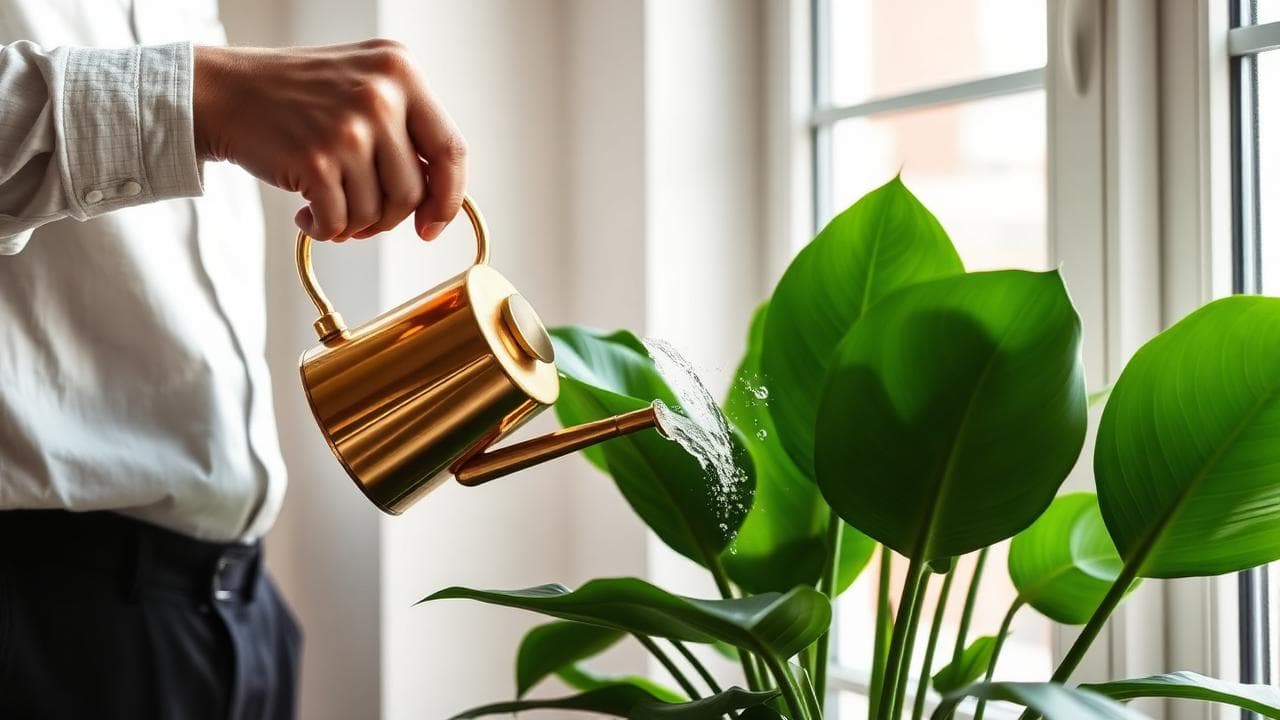
A snake plant needs water only every 2 to 3 weeks in a Dubai summer and every 3 to 5 weeks in winter, bright to moderate indirect light, and a fast-draining pot. Overwatering is what kills it, not neglect. Let the soil dry out fully between waterings.
Key takeaways
- Water when the soil is dry all the way down, usually every 2 to 3 weeks in summer and every 3 to 5 weeks in winter, indoors under AC.
- It tolerates low light, but grows better in bright indirect light a few metres from a window.
- Soft, mushy leaves at the base mean root rot from too much water. Yellow leaves almost always point to the same cause.
- AC dries the air but a snake plant copes with it. Keep it out of the direct blast of a vent.
- Repot every 2 to 3 years into a pot only slightly bigger, with a gritty mix.
How much light does a snake plant need indoors in Dubai?
Snake plants (Dracaena trifasciata, previously sold as Sansevieria) are among the few plants that live in dim rooms. In a flat with one small window, they will survive well back from the glass. They grow faster and keep stronger colour in bright, indirect light, for example a metre or two from a window that doesn't take direct afternoon sun.
Direct summer sun through glass in Dubai is the one thing to avoid. A leaf pressed against a hot, west-facing window can bleach or develop pale, dry patches. If the plant has to sit near a sunny window, pull it back or filter the light with a sheer curtain.
How often should you water a snake plant in a Dubai summer?
Snake plant leaves store water, so the plant is built for long dry spells. In summer, an air-conditioned room is cool but dry, and the pot dries more slowly than you'd expect because the plant barely grows in low light. A rough rhythm is every 2 to 3 weeks, but don't follow a calendar. Push a finger or a wooden skewer to the bottom of the pot. If anything feels damp, wait.
When you do water, soak the soil until water runs out of the drainage holes, empty the saucer after 15 minutes, and then leave it alone.
How often should you water it in winter (November to March)?
Cooler months slow growth even more. Many people water every 3 to 5 weeks from November to March. A plant on a shaded balcony or in a room with the AC switched off can stay wet longer than one in a heated or cooled office, so go by the soil, not the month.
What does AC do to a snake plant?
Air conditioning removes moisture from the air. Snake plants evolved in dry regions, so low humidity rarely bothers them the way it bothers a calathea or a fern. The bigger risk is a vent blowing cold air straight onto the leaves all day, which can cause pale, papery patches or leaf edges that go dry. Move the pot out of the airflow and the damage stops spreading.
The same cold air slows the soil's drying, so AC is another reason not to water on a fixed schedule. If you want to know more about cooling and plants generally, read our guide to indoor plant care in air-conditioned Dubai homes.
What soil and pot suit a snake plant?
Use a coarse, quick-draining mix: regular indoor potting soil with a good handful of perlite or coarse sand, or a cactus mix. The pot must have drainage holes. A decorative pot with no hole is fine as an outer sleeve, as long as you lift the plant out to water and let it drain.
Snake plants like to be snug. Repot every 2 to 3 years, or when roots push through the drainage holes or the pot starts to bulge. Go up one pot size only. A big pot holds extra wet soil that stays damp for weeks. Repotting is best done in spring or autumn when the plant is growing a little. We cover this in plant repotting if you'd like a hand with a large plant.
How big does a snake plant get indoors?
It depends on the variety. Tall types such as 'Laurentii' commonly reach roughly 60 cm to 1.2 m indoors, with leaves growing upright from a clump. Compact rosette types stay under about 30 cm. Growth is slow, so a plant you buy at a given height will look much the same for a year or more. You can see what we stock on the snake plant product page.
Why are my snake plant's leaves turning yellow, soft or brown?
- Yellow and soft near the base: overwatering and root rot. Stop watering, tip the plant out of the pot, cut away black or mushy roots with clean scissors, and repot into dry, gritty mix. Leaves that are already mushy won't recover, so cut them off at soil level.
- Brown, crispy tips: often dry soil for too long, a cold vent, or a build-up of mineral salts from tap water. Water thoroughly, flush the pot with extra water every few months, and move it from the airflow.
- Wrinkled, curling leaves: the plant is very dry. A thorough soak fixes it within a week or two.
- Pale patches: sun scorch from a hot window, or cold-air burn from a vent.
- Leaning or flopping: too little light, or a pot too light for a tall plant.
Which pests attack snake plants, and how do you deal with them?
The usual ones are mealybugs, spider mites and scale insects, plus fungus gnats if the soil stays wet.
- Mealybugs look like small white cotton tufts at the base of leaves. Dab each with a cotton bud dipped in rubbing alcohol, then check weekly.
- Spider mites leave fine stippling and sometimes thin webbing. Wipe the leaves with a damp cloth and rinse the plant in the shower. Mites favour dry air, so keep checking.
- Scale shows as brown bumps on the leaves. Scrape off by hand or with a soft brush and soapy water.
- Fungus gnats are small flies around the pot. Let the soil dry out more between waterings and the larvae die back.
If an infestation keeps returning, isolate the plant from your others while you treat it.
Do you need to clean the leaves in Dubai?
Yes, now and then. Dust from construction and desert air settles on the flat leaves of a snake plant. Wipe them with a damp cloth every month or two. Clean leaves take in light better and make pests easier to spot.
Want help with large or office plants?
If you have a lobby, an office or a number of tall plants, Green Beetle's team can look at them as part of plant maintenance. Pricing is quoted after a free site visit. To buy plants, see our indoor plants range.
Reviewed by Hamza, site supervisor at Green Beetle.