
Rubber tree care in Dubai: light, water, pruning and pests
Need this done for you? Free site visit. Message us on WhatsApp (opens WhatsApp)
Rubber tree (Ficus elastica) care for Dubai homes: bright light, watering under AC, wiping leaves, pruning, repotting and fixes for leaf drop and pests.
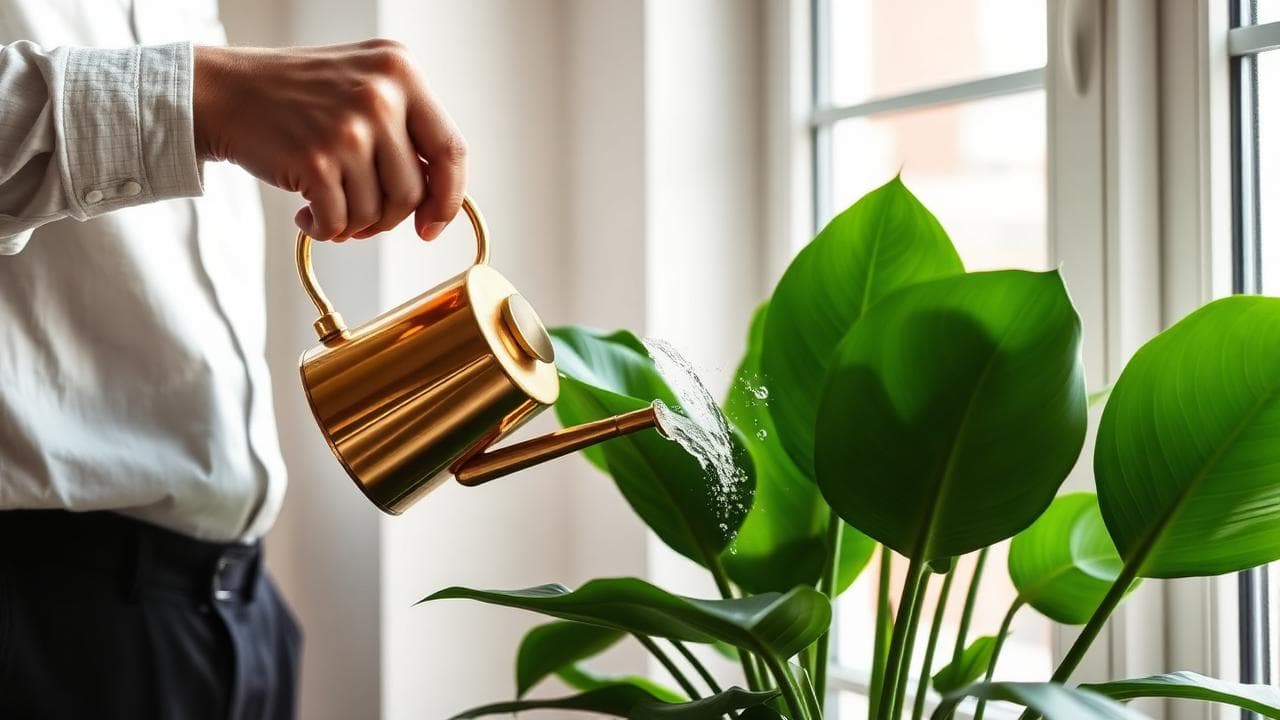
A rubber tree (Ficus elastica) needs bright indirect light, water when the top 5 cm of soil is dry (about every 7 to 10 days in a Dubai summer, every 10 to 14 days in winter), and a steady spot. It drops leaves if it sits wet or gets moved.
Key takeaways
- Bright indirect light keeps it compact and glossy. Low light makes it stretch and drop lower leaves.
- Water when the top 5 cm is dry: roughly every 7 to 10 days in summer, 10 to 14 in winter, under AC.
- Leaf drop usually follows overwatering, a cold vent or a move.
- Wipe the big leaves every month or two. Dust is heavy in Dubai.
- Prune above a leaf node to make it branch.
How much light does a rubber tree need indoors?
Give it bright, indirect light, such as a spot a metre or two from a large window. A few hours of gentle morning sun is fine. Strong afternoon sun through Dubai glass can scorch the leaves, so filter west and south light with a sheer curtain.
Dark-leaved types such as 'Burgundy' and 'Black Prince' tolerate a bit less light than variegated forms, which need brighter light to keep their cream and pink markings. In low light, any rubber tree grows tall and thin with large gaps between leaves.
How often should you water a rubber tree in a Dubai summer?
Wait until the top 5 cm has dried, then water thoroughly until it runs from the pot's drainage holes. In an air-conditioned room in summer that is commonly every 7 to 10 days, though a big plant in a bright room dries faster than a small one in a dim corner. Empty the saucer afterwards.
Overwatering is the most common mistake. Roots sitting in wet soil rot, and the first sign is yellowing lower leaves that drop.
And in winter, from November to March?
Growth slows, so watering every 10 to 14 days is typical indoors. Check the soil with a finger or skewer before you water.
What does AC do to a rubber tree?
Rubber trees are more tolerant of dry air than many tropical plants, but the AC still shows on the leaves. Look for crisp brown edges, leaf drop after a cold blast and spider mites, which like dry air. Keep the plant out of the direct airflow from vents. Grouping it with other plants or using a pebble tray with water below the top of the pebbles helps humidity a little.
How do you clean and prune a rubber tree?
Wipe the large leaves with a damp cloth every month or two. Clean leaves take up light better and show pests early. Avoid commercial leaf-shine products, which can clog the surface.
To control height or make it branch, cut the main stem just above a leaf node with clean, sharp secateurs, in spring or summer. New shoots will usually form below the cut. The cut stem oozes milky sap, so wear gloves and wipe the surface with a cloth.
What soil, pot and repotting does it need?
Use a chunky indoor potting mix with perlite or bark for drainage. The pot must have holes. Repot every 1 to 2 years in spring or autumn into a pot one or two sizes bigger, when roots circle or poke out of the drainage holes. Tall plants are heavy and top-heavy, so a stable pot matters. Our plant repotting service can handle large ones.
How big does a rubber tree get indoors?
In a home, a mature rubber tree commonly reaches around 1.5 to 3 m, with leaves 15 to 30 cm long. Growth is quick in bright light in the warm months. You can keep it smaller by pruning. Our shop lists the rubber tree.
Why are my rubber tree's leaves dropping, yellow or brown?
- Yellow lower leaves, then dropping: overwatering or poor drainage.
- Sudden leaf drop: a move, a cold draught or a big change in light.
- Brown, crispy edges: dry air or salt build-up.
- Brown spots in the middle: often overwatering or a fungal leaf spot.
- Drooping, curled leaves: thirst.
- Leggy growth: not enough light.
- Pale scorch patches: strong direct sun.
Which pests affect rubber trees?
The common ones are scale, mealybugs and spider mites. Scale looks like small brown bumps on stems and the undersides of leaves, often with sticky residue. Mealybugs are white, cotton-like tufts in leaf joints. Spider mites leave fine speckles and thin webs on dry plants. Fungus gnats appear when soil stays wet.
Wipe the leaves, including the undersides. Scrape scale off or dab it and mealybugs with a cotton bud dipped in rubbing alcohol, repeating weekly. Rinse the plant in the shower for mites. If infestations keep coming back on a big plant, our team can take a look as part of plant maintenance, quoted after a free site visit.
If you like the look of broad, glossy leaves, our fiddle leaf fig guide covers a fussier relative. Browse the range in indoor plants.
Reviewed by Hamza, site supervisor at Green Beetle.