
Monstera deliciosa care in Dubai: light, water and support
Need this done for you? Free site visit. Message us on WhatsApp (opens WhatsApp)
Monstera deliciosa care for Dubai homes: light for split leaves, watering under AC, humidity, support poles, repotting and fixes for brown edges and pests.
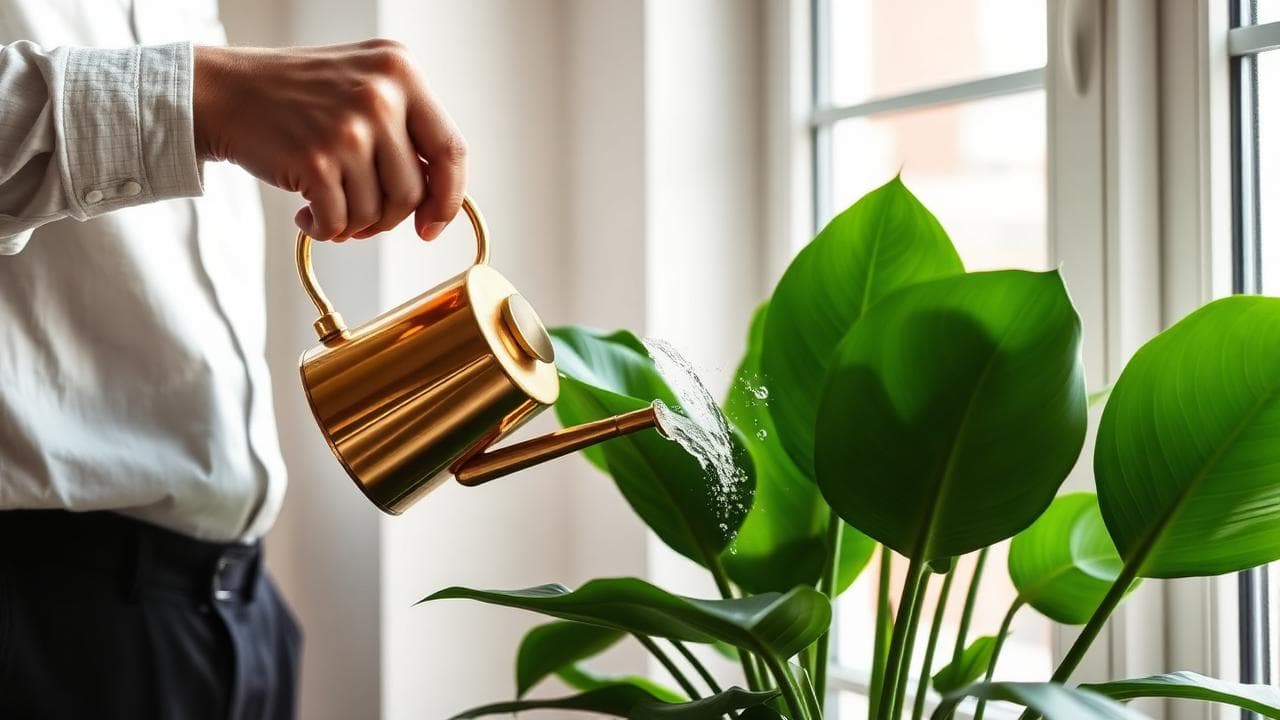
Monstera deliciosa needs bright indirect light, water when the top 5 cm of soil is dry (roughly every 7 to 10 days in a Dubai summer, every 10 to 14 days in winter), and a pole to climb. Low light is the usual reason new leaves stay solid.
Key takeaways
- Bright indirect light produces the large, split leaves. Dim rooms give small, solid ones.
- Water when the top 5 cm is dry: about every 7 to 10 days in summer, 10 to 14 days in winter, indoors under AC.
- Keep it out of direct afternoon sun through glass and out of the direct flow from a vent.
- Give it a moss pole or sturdy stake. Aerial roots look odd but are normal.
- Brown, crisp edges point to dry air or salts. Yellow leaves with wet soil point to overwatering.
How much light does a monstera need in a Dubai home?
Monstera deliciosa grows under taller trees in the wild, so it likes bright light that is filtered. Indoors, a spot within a metre or two of a bright window works. Morning sun is fine. Hot afternoon sun through Dubai glass can scorch the leaves, leaving pale, dry patches, so use a sheer curtain on west-facing windows.
Light controls the shape. The splits and holes (fenestrations) mostly appear on mature leaves with enough light. In a low-light apartment room, leaves tend to stay smaller and heart-shaped, and the stems stretch toward the window. Turn the pot a quarter turn every week or two so growth stays even.
How often should you water a monstera in a Dubai summer?
Let the top 5 cm of soil dry, then water thoroughly until it runs from the drainage holes. In an air-conditioned room in summer that is commonly every 7 to 10 days. A large plant in a bright room drinks faster than a small one in a dim corner, so test with a finger each time rather than watering on a set day.
Leaves that curl inwards and droop slightly usually mean thirst. Yellow leaves with damp soil mean too much water.
And in winter, from November to March?
It uses less water when the weather cools and growth slows. Every 10 to 14 days is typical indoors. A plant on a balcony will dry faster on a sunny, breezy day, so check it more often.
What does AC do to a monstera?
Air conditioning dries the air, and monsteras prefer higher humidity than most Dubai flats offer. The typical signs are brown, crisp leaf edges and leaf tips, and new leaves that unfurl with ragged margins. A cold draught directly on the plant can also cause leaf drop.
Things that help:
- Move the plant out of the direct airflow.
- Group it with other plants.
- Use a pebble tray, with water below the top of the pebbles so the pot doesn't sit in it.
- Run a small humidifier nearby if the room is very dry.
- Wipe the leaves with a damp cloth to remove dust.
What soil, pot and support does a monstera need?
Use an airy indoor mix with bark or perlite, so water drains fast and roots get air. The pot must have drainage holes. A monstera is a climber, so give it a moss pole or sturdy stake. Climbing plants tend to produce larger leaves with more splits, and the pole keeps heavy stems from flopping.
Aerial roots are normal. Tuck them into the pole or the soil, or leave them. Don't cut off healthy ones unless they're in the way.
Repot every 1 to 2 years in spring or autumn, into a pot one size bigger, when roots circle or poke out of the base. Large plants are heavy, so our plant repotting service can take care of that for you.
How big does a monstera get indoors?
In a home, a mature monstera commonly reaches around 1.5 to 2.5 m with support, and its leaves can grow 30 to 60 cm wide in good light. Growth is fast in the warm months and slower in winter. You can view the Monstera Deliciosa in our shop.
Why are my monstera's leaves turning yellow or brown?
- Yellow lower leaves with damp soil: overwatering. Let the soil dry more between waterings and check that the pot drains.
- A single old yellow leaf: normal ageing. Remove it.
- Brown, crispy edges: dry air, a vent, or salt build-up from tap water. Move the pot, add humidity, and flush the soil with plenty of water every few months.
- Brown spots with yellow halos: often too much water or a fungal spot. Remove the leaf and water less.
- Black, mushy stem base: root rot. Unpot, trim the damaged roots and repot in fresh mix.
- Solid leaves and long gaps between leaves: too little light.
- Pale, bleached patches: sun scorch.
Which pests affect monstera?
Spider mites, mealybugs, scale and thrips are the usual ones, plus fungus gnats if the soil stays wet. Mites show as fine speckling and thin webbing, mostly on dry, air-conditioned plants. Mealybugs look like cotton tufts in leaf joints. Scale is small brown bumps on stems. Thrips leave silvery streaks and black dots.
For a light infestation, wipe the leaves, including the undersides, with a damp cloth and rinse the plant in the shower. Dab mealybugs and scale with a cotton bud dipped in rubbing alcohol. Repeat weekly and keep the plant away from the others. If it keeps coming back, see plant maintenance, where our team can look at the plant after a free site visit.
For more on cooling and plants, see our guide to indoor plant care in air-conditioned Dubai, and to browse the range, visit the indoor plants category.
Reviewed by Hamza, site supervisor at Green Beetle.